


Few people are familiar with Chovken, an ancient equestrian sport closely related to modern polo. While polo was formalised by British society in India during the 19th century, Chovken has preserved its indigenous roots, maintaining a direct link to centuries-old traditions. Unlike polo, which is now played in nearly every corner of the world, Chovken remains a cultural treasure—and since 2024, it has begun making international strides towards becoming a global celebration of authentic sporting heritage.
The International Chovken Federation (ICF), headquartered in Baku, Azerbaijan, is at the forefront of this movement. Its mission: to organise international Chovken tournaments and promote this Persian-origin sport, which holds great cultural significance and has been recognised by UNESCO’s List of Intangible Cultural Heritage in Need of Urgent Safeguarding since 2013.
The International Chovken Federation’s Global Vision
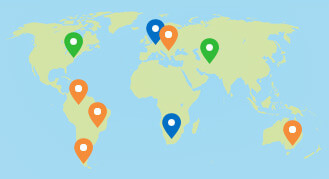
Under the dynamic leadership of the ICF, the sport has rapidly gained international recognition. The Federation’s Board comprises passionate equestrians and cultural ambassadors who have already organised successful events in Azerbaijan, Poland, Egypt, Uzbekistan, and Nigeria, with plans underway for a South American debut.
The Federation is led by President Bahruz Nabiyev (Azerbaijan), General Secretary Maciej Olbrych (Poland), and Executive Director Farid Eyvazov (Azerbaijan), all of whom bring extensive knowledge and management experience from the global polo community—an invaluable asset in advancing Chovken’s international presence.
Basic Rules of Chovken
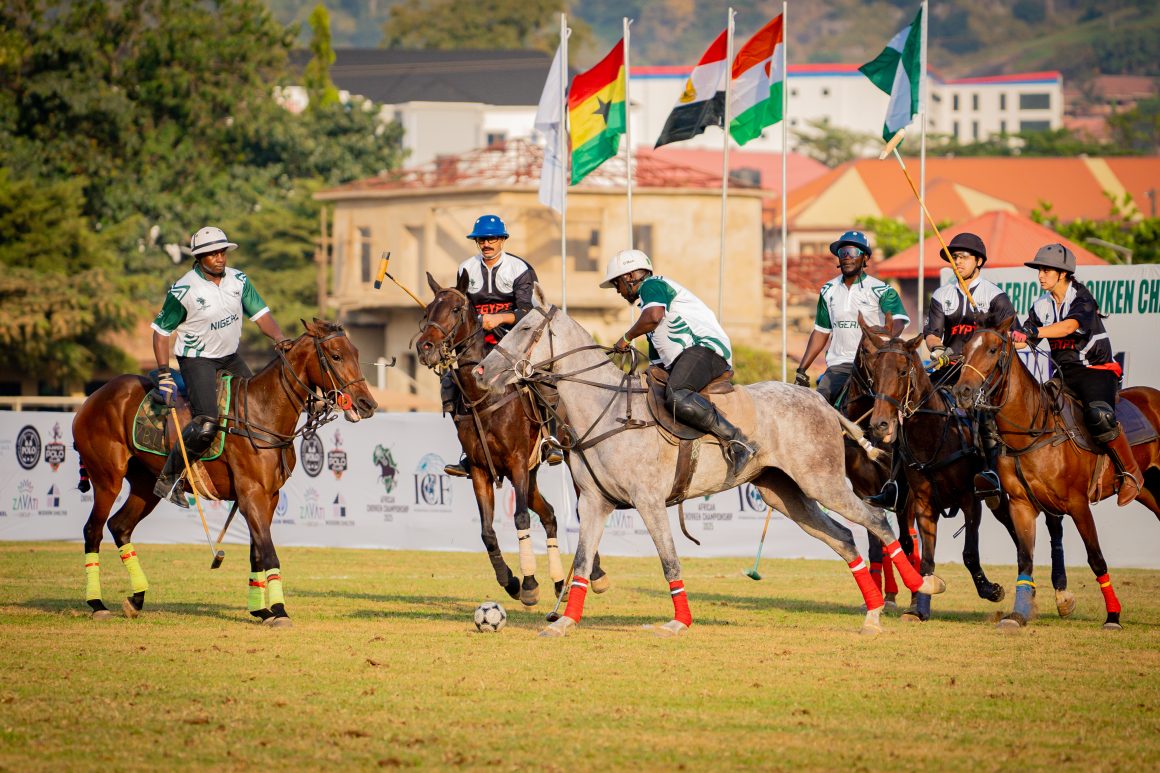
Although Chovken shares many similarities with polo—both being played on horseback with mallets and goalposts—it carries distinct differences that make it unique in both athletic and ceremonial spirit.
Key Rules:
- Each team consists of four players.
- Hooking an opponent’s mallet is not allowed.
- Players may ride into the line of the ball, but only at a safe angle.
- A match lasts 30 minutes, divided into two 15-minute halves. Play continues even during umpire interruptions.
- In the event of a corner shot, the ball is placed in the actual corner of the field, similar to football.
- The game begins not with a throw-in but with a kick-off from the centre.
- No player may touch the ball inside the D-shaped area in front of the goalposts.
- All players traditionally wear black trousers.
Beyond these formalities, Chovken stands out for allowing cultural expression within play—each match blending athletic skill with ceremonial grace.
From the African Chovken Championship to Egypt
Chovken was recently showcased on a high-profile stage in Abuja, Nigeria, where the Guards Polo Clubhosted the first African Chovken Championship. The event, rich in African culture and vibrant hospitality, was organised by Mr. Alh Nura Sani Kangiwa and Abdulkarim Kabir, the leading representatives of Chovken in Africa.
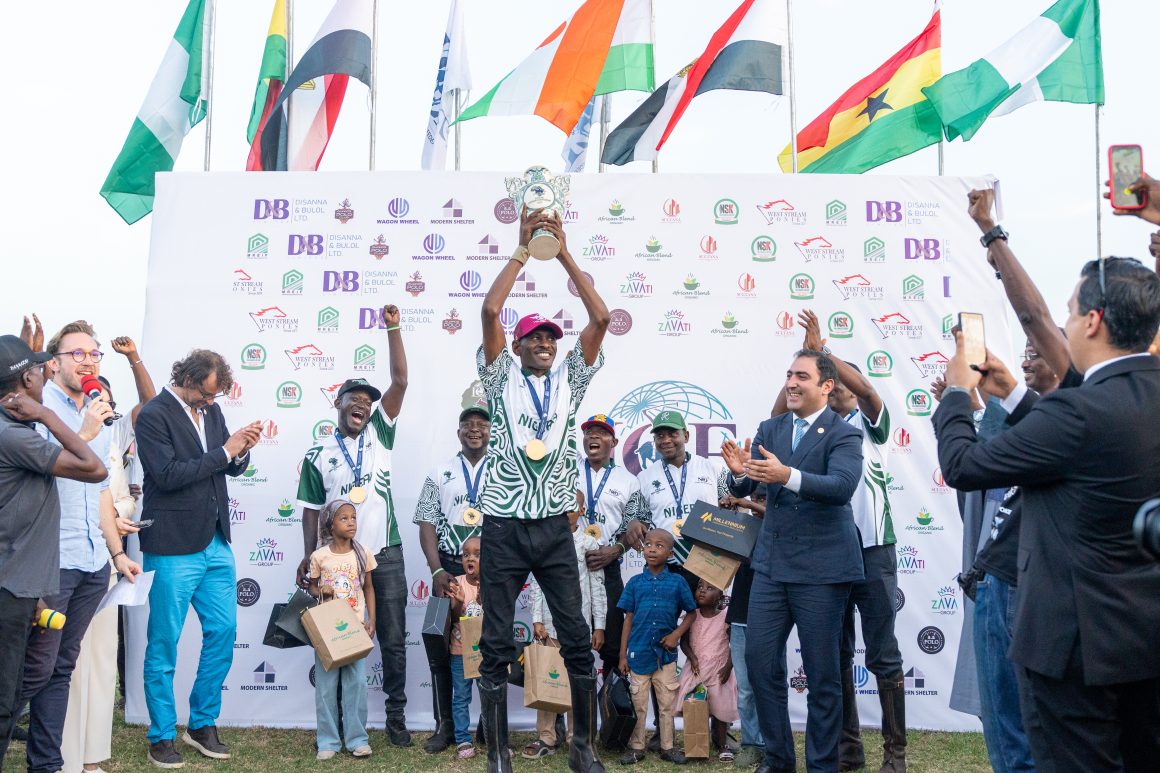
International teams from Egypt, Ghana, and Niger joined the Nigerian hosts for a thrilling three-day tournament, with all players mounted on thoroughbred horses. The Nigerian team emerged victorious, having previously competed in the World Chovken Championship in Baku (Summer 2024). Niger secured second place, followed by Ghana in third and Egypt in fourth.
Despite their fourth-place finish, the Egyptian team left Abuja in high spirits, warmly inviting the Chovken community to the upcoming Chovken Sport Festival in Port Ghalib, located on the Red Sea coast of Egypt. The festival will take place at the Port Ghalib Polo Club from January 4th to 8th—a celebration expected to blend sport, heritage, and hospitality in true Chovken style.
Text: Jan Zavázal,
Photos: ICF & NCF